






•
•
| Sort by by name | Advanced search |


Krāslava, Krāslavas nov., LV-5601
Phone: +371 65622201
One of the highest observation towers in Latvia (32 m), from which a beautiful sight to Daugava can be viewed.
Robežnieki, Robežnieku pagasts, Krāslavas nov., LV-5666
Phone: +371 22015347, +371 65629524
It is located in Robežnieki, on the shore of the lake Lielais Gusena ezers, in picturesque neighbourhood with naturally preserved stages of survey, there are also two facilitated resting areas. The total length of the path is 1,3 km. There are 15 stops with information stands and attractive tasks along the path. The path made with a purpose for everybody to learn about nature objects, get aesthetic satisfaction and have a good rest.
Rakuti, Ūdrīšu pag., Krāslavas nov.
Phone: +371 26538824, +371 29106312
The fields of herbal plants on the territory of ecollogicaly clean and rich with landscapes country park "Daugavas loki". Cognitive trail.
Krāslava, Krāslavas nov., LV-5601
Phone: +371 656 22201
Here is dark as chocolate clay. In the hillfort were found remains of stone axes, animal bones, earthenware.
Aulejas, Skaista parish, Krāslavas nov.
Phone: +371 65622201. Mob.phone: +371 29376090
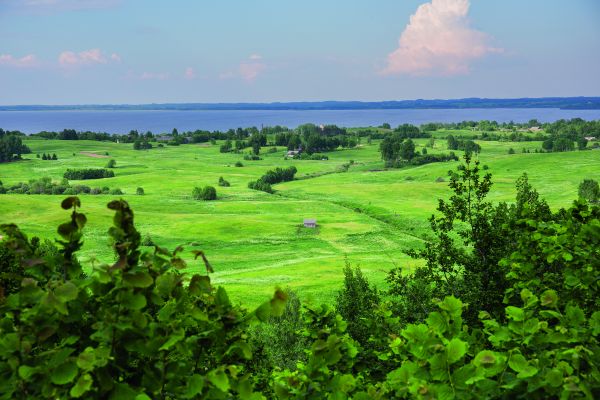
Sīvers is the 9th biggest lake in Latvia. It is located on monticule of Dagda (159.4 m a.s.l.) The space of lake is 18.74 km2. The lake is very twisting, irt has 25 islands. The biggest of them is Lielā sala (The Big island). On the island grow hazels, oaks, maples, linden and a lot of dofferent berries : raspberries, red bilberries and cranberries. The maximum depth of the lake is 24.5 m, the average depth - 14 m. The lake Sīvers with the other lakes makes the richest group of lakes in Latvia. It can be very good seen from the Sauleskalns (mountain).
the beginning of Augusta Street, Krāslava, Krāslava un Ūdrīšu pagasts, Krāslavas nov., LV-5601
Phone: +371 656 22201. Mob.phone: 29376090
There is a posibility to enjoy magnificent landscapes, to walk about the mysterious ravines, to watch natural sites and rarity, to observe original trees, rare and protected plants.
Ūdrīši and Kaplava Parishes, Krāslava District; Saliena, Skrudaliena, Vecsaliena, Tabore, and Naujene Parishes, Augšdaugava District, Krāslavas nov., LV-5601
Phone: +371 65471321 (Naujenes Novadpētniecības muzejs) ; +371 656 22201 (Krāslavas novada TIC)
River Daugava Bends (loki) is a Nature Park in River Daugava valley between Kraslava and Naujene in Augsdaugavas Protected Landscape Area. The territory of the park is 129.9 km2, 76 km2 of which are located in Daugavpils and 53.9 km2 in Kraslava's region. It had been founded in 1990 to preserve the unique and peculiar River Daugava valley landscape, its valuable natural complexes, its biodiversity of plant and animal species, as well as its cultural-historic monuments. The most characteristic natural feature of "Daugavas loki" is 9 big River Daugava Bends (meanders) between Kraslava and Naujene. Each of the river bends length reaches up to 4 - 6 km, but the distance between the bends on the straightaway is only 2 - 3 km. Each of the bends has its own name. In 2011, it was included in the Latvian National List of the UNESCO World Heritage.
Augusta iela (near the Karņicka Monument), Krāslava, Krāslava, Krāslavas nov., LV-5661
Phone: +371 656 22201. Mob.phone: 29376090
From here a beautiful view opens up to the River Daugava. By this secular stone Latvian writer Antons Austriņš was creating his works in 1909.
Skaistas un Kombuļu pagasti, Krāslavas novads
Dridzis is the deepest lake in the Baltic States. The Lake has characteristic elongated shape, many bays, nine islands; the biggest of them is the island Bernatu sala (13,9 ha). Lake makes curves just like a river. It makes many creeks and peninsulas. Maximum depth reaches 65,1 m. The length of the shore reaches 11 km. The widest place is 1 km. From the hills the great panorama of the Lake is seen. Dridzis is in the territory of a protected Nature Park.
Pils iela 2-10, Krāslava, Krāslavas nov.
Phone: +371 656 23586, +371 656 22201. Mob.phone: +371 29376090
Many positive changes have taken place in Count Plater's Palace Complex, which is an architectural monument of national importance. The Palace Complex has already become a popular tourist and wedding destination and a place for walks for inhabitants of Kraslava.
Since 2004, Count Plater's Palace Complex has been owned by the Kraslava Municipality, which is actively working to promote the development of the palace and park territory. The development concept of the Palace Complex has been prepared. The vision of the concept - Plater's Palace Complex is a cultural and historical center of Kraslava, the pride of Kraslava and Latgale region, a widely visited and popular cultural, educational and tourism object. Kraslava Municipality implements various projects, which are funded by Municipal, State and European Union programs.
Each building of the complex performs its own function - Kraslava County Museum with various expositions, Kraslava Tourist Information Center, Olga Gribule's porcelain doll collection, restaurant "Fon Bubert" and Kraslava Craft Center, which was opened in 2021. Various cultural events, exhibition openings, fairs, excursions take place within the complex.
There are some beautiful environmental objects in the Palace Park, for example, metal carriage and the sculptures of Count and Countess. The idea of metal carriage belongs to residents of Kraslava, but installation was financed by the Municipality in 2015. The sculptures of Count and Countess, which are 2 meters high, were installed in 2020.
Piedruja, Piedrujas pagasts, Krāslavas novads
Mob.phone: +371 26357228
Located in Piedruja in the ancient valley of the upper River Daugava, within the Augšdaugava Protected Landscape Area, which is rich in rare and protected plant and animal species, as well as cultural landscape and historical monuments. Walking along the Piedruja Trail, you can see the Daugava Stone. The name “Daugava” is engraved on this stone in seven languages: Estonian, Finnish, Russian, Polish, German, Livonian, and Latvian. It is situated by the River Daugava.
A passport or ID card is required!
Kaplava, Kaplavas pagasts, Krāslavas nov., LV-5668
Mob.phone: +371 29472638
The Odu Trail introduces visitors to forest and marsh landscapes, where you can observe various plants such as thistles and sedges, and also encounter forest bees. There is an opportunity to visit the marsh’s “concert hall,” an area of spruce trees, see wild boar tracks, and observe unusually grown trees (birch, spruce, and pine).
Passports are required! Prior registration is necessary!
Piedruja, Kreis Piedruja, Krāslava Municipality, Krāslavas nov., LV-5662
Phone: +371 26357228
It is located in Piedruja, in the upper course valley of the river Daugava, in the territory of Augšdaugava protected landscape area, which is rich with rare and protected species of plants and animals, as well as with cultural landscape and historical monuments. Walking along Piedruja path, Stone of Daugava can be seen. On this stone the name of Daugava river is engraved in seven languages – Estonian, Finnish, Russian, Polish, German, Livonian, and Latvian. Located near river Daugava.
Piedruja trail is unique, because walking on it, you can observe the life of residents living on the left bank of the river Daugava, our neighbours Belorussians. Piedruja is very close to the Republic of Belarus and there is also protected water border along the river Daugava.
It’s necessary to have a passport! Book your visit in advance!
Augusta Street 12, Krāslava, Krāslavas nov., LV-5601
Phone: +371 656 22201. Mob.phone: 29376090
Stone is 2.8 m long, and high - 0.7 m. There is the coat of arms of counts Platers family and years number 1729 on the stone sides. Count Platers bought Kraslavas estate in this year and Kraslava got rights of the small village. From the legend comes, that in 1729. in Kraslava came king August the Strong from Poland to hunt, who was sitiing on this stone, therefore stone has its name.